
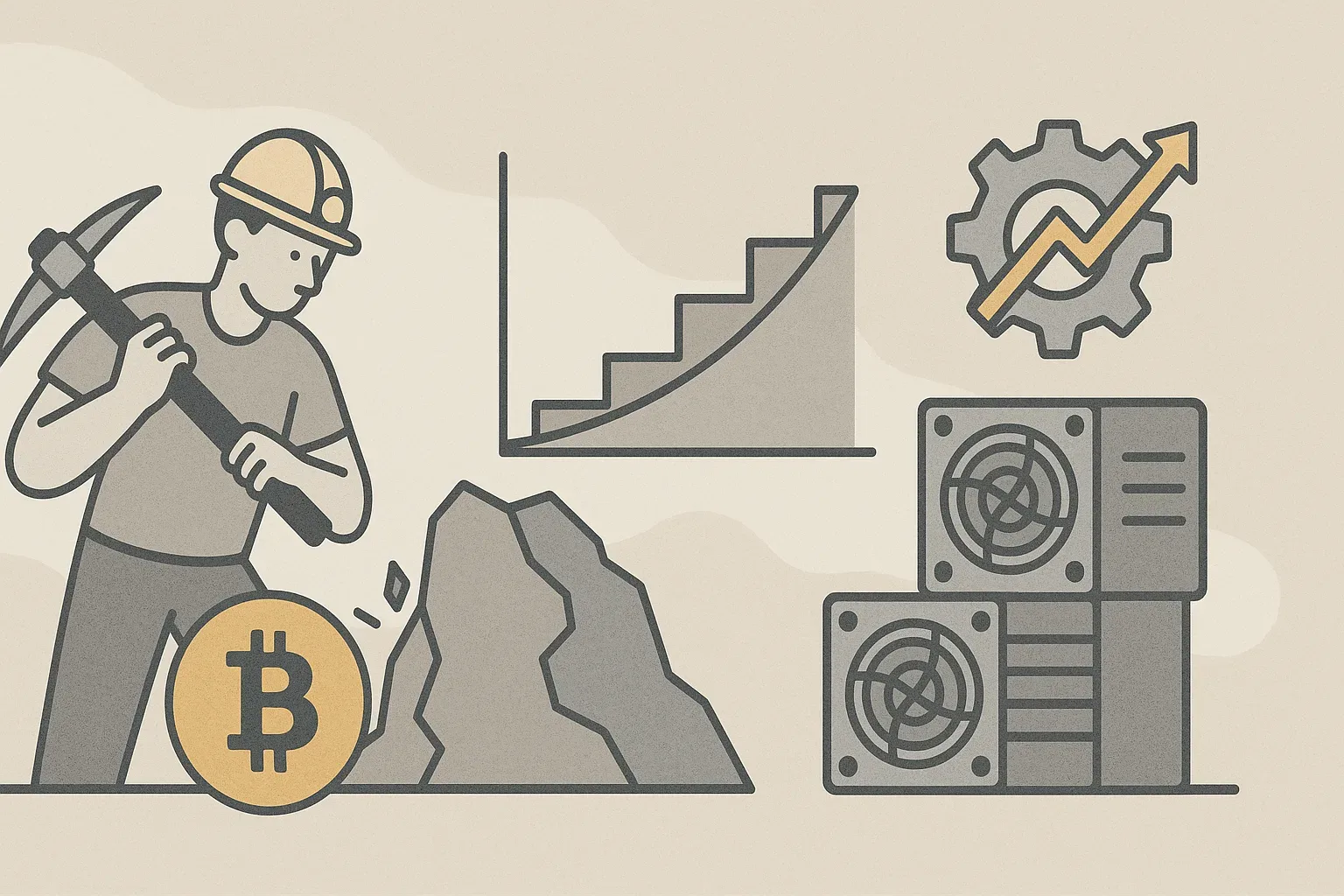
Bitcoin mining is often described as a race, but it's a race with an ever-changing finish line. This shifting target is precisely what Bitcoin mining difficulty represents. At its core, difficulty is a measure of how hard it is to find a hash below a certain target. When the network's total computational power, known as hashrate, increases, the difficulty automatically rises to ensure blocks are found at a consistent rate. Conversely, if hashrate drops, difficulty falls. This dynamic adjustment is fundamental to Bitcoin's economic stability and predictable supply schedule, preventing rapid inflation or deflation that could undermine its value proposition.
What is Bitcoin Mining Difficulty? An Essential Overview
Bitcoin mining difficulty is a metric that quantifies how challenging it is to find a hash that meets the requirements for a new block. To successfully mine a block, a miner must find a numerical output, a 'hash,' that is less than or equal to a specific target value. This target value is what the difficulty adjustment mechanism manipulates. A lower target value makes it harder to find a valid hash, thus increasing the difficulty. The process involves miners repeatedly calculating cryptographic hashes (using the SHA-256 algorithm) of a block candidate's header, which includes a variable number called a 'nonce,' until one of these hashes falls below the current target. This trial-and-error process is what consumes computational power and energy.
The Core Purpose: Why Bitcoin's Difficulty Adjustment is Non-Negotiable
The network aims for a new block every 10 minutes. This precise timing ensures that the rate at which new Bitcoin is introduced into circulation remains constant, independent of external factors like technological advancements in mining hardware or the fluctuating number of miners participating in the network. This consistency is not just about economics. It's also about security. It also underpins Bitcoin's scarcity, as the total supply limit of 21 million coins is tied directly to this consistent block issuance schedule.
Demystifying the Algorithm: How Bitcoin Difficulty is Calculated
The calculation of Bitcoin's difficulty involves a precise algorithm designed to maintain the 10-minute block target. At a technical level, difficulty is not directly calculated but rather derived from a 'target' value. A block is considered valid only if its hash is less than or equal to this target. The lower the target value, the more difficult it is to find such a hash, because the range of acceptable hashes is smaller. The difficulty value itself is a representation of how much harder or easier it is compared to the network's initial difficulty. Specifically, it's defined as the maximum possible target divided by the current target. The maximum possible target is derived from the 'genesis block' and is a very large number (roughly 2^224). This adjustment is deterministic and occurs automatically based purely on the time elapsed for the previous 2016 blocks.
The Mechanics of Adjustment: When and How Difficulty Changes
The network measures the actual time it took to mine the previous 2016 blocks. The ideal time for 2016 blocks to be mined is 2016 blocks * 10 minutes/block = 20,160 minutes, which equals exactly two weeks (14 days). If the actual time was less than 14 days, it implies that the total hashrate of the network increased during that period, and blocks were found faster than intended. If the actual time was greater than 14 days, it indicates that the total hashrate decreased, and blocks were found slower than intended.
What are the Key Factors that Cause Bitcoin Mining Difficulty to Change?
With more processing power dedicated to hashing, blocks are found more quickly than the targeted 10-minute average. These external forces motivate miners to enter or exit the network, thereby driving the changes in hashrate that ultimately trigger difficulty adjustments.
Direct Impact on ASIC Miners: Profitability, Hardware, and Strategy
This is because a higher difficulty means that each hash contributed to the network has a lower probability of being the one that solves the block. Consequently, the share of the block reward that an individual miner or mining pool receives (after accounting for pool fees) diminishes proportionally. This directly impacts revenue calculations. Miners must constantly monitor their operational costs, primarily electricity, against their potential Bitcoin earnings. As difficulty rises, the fixed cost per terahash of electricity effectively yields less Bitcoin revenue. This pressure forces miners to evaluate the efficiency of their hardware. Older ASICs with higher Joules per Terahash (J/TH) become increasingly unprofitable as difficulty increases, as their electricity cost per unit of Bitcoin mined becomes too high. Strategic decisions revolve around this dynamic: when to invest in newer, more efficient hardware, when to scale operations up or down, and how to optimize electricity procurement. Without a clear understanding of difficulty trends, miners risk running their machines at a loss, especially if they are using older, inefficient models. The focus must always be on maintaining a competitive J/TH ratio and securing the lowest possible energy prices.
How Do Difficulty Adjustments Directly Affect the Profitability and Hardware Decisions of ASIC Miners?
Difficulty adjustments have an immediate and profound impact on the profitability and hardware decisions of ASIC miners. Each increase in difficulty means that a miner's existing hashrate will generate less Bitcoin revenue over a given period, assuming all other factors (like Bitcoin price and block reward) remain constant. This directly compresses profit margins. As margins shrink, miners with less efficient hardware (higher J/TH) are the first to become unprofitable. Their electricity costs per unit of Bitcoin produced become unsustainable, forcing them to power down their machines or operate at a loss. This creates a continuous pressure to upgrade to more efficient ASIC models. Miners are constantly analyzing the market for machines with better J/TH ratios, as these machines can remain profitable for longer in a rising difficulty environment. The decision to purchase new hardware is often driven by anticipated difficulty increases and the desire to stay ahead of the profitability curve. Conversely, a significant drop in difficulty, though less common in Bitcoin's history, can make previously unprofitable machines viable again, incentivizing miners to bring them back online. Miners are often driven to regions with the cheapest electricity to offset the impact of rising difficulty. Strategic planning involves calculating a 'break-even difficulty' for each miner and adjusting operational strategies accordingly, which often means an ongoing cycle of hardware upgrades and efficiency improvements.
Anticipating Changes: Tools and Resources for Tracking Difficulty
Anticipating Bitcoin difficulty changes is a critical component of strategic planning for ASIC miners. While the exact moment and magnitude of the next adjustment are only finalized at block 2016 of the current epoch, various tools and resources provide reliable estimates based on the current network hashrate. These tools are invaluable for miners to project their future profitability, make informed decisions about hardware upgrades, and manage operational costs. The fundamental data points for these estimations are the current network hashrate and the number of blocks remaining in the current difficulty epoch. Tracking services typically offer real-time updates on these metrics. Relying on such data allows miners to adjust their energy consumption forecasts and evaluate the viability of their mining operations under various difficulty scenarios. For instance, if a significant difficulty increase is projected, a miner might consider activating more efficient machines or exploring opportunities to lower their electricity rates.
Where Can ASIC Miners Find Reliable Information to Track Current and Projected Difficulty Levels?
ASIC miners have access to several reliable online platforms and tools to track current and projected Bitcoin mining difficulty levels. Public block explorers are a fundamental resource; websites like Blockchain.com, BTC.com, and mempool.space provide real-time data on the current block height, estimated time until the next difficulty adjustment, and often, a projected percentage change for the upcoming adjustment. These sites also display the current network hashrate, which is the key driver for difficulty changes. Mining pool dashboards, such as those offered by F2Pool, AntPool, or ViaBTC, also integrate difficulty tracking into their user interfaces, providing relevant metrics directly to their members. Beyond these, dedicated mining data analytics platforms and news sites often publish more in depth analyses and forecasts for difficulty adjustments, sometimes offering historical data and trend analysis. When using these resources, miners should look for key metrics: the current difficulty value, the number of blocks remaining in the current 2016-block epoch, the estimated time until the next adjustment, the current network hashrate, and a clear projection for the next difficulty change (e.g., +X% or -Y%). Cross-referencing information from multiple reputable sources is always a good practice to ensure accuracy in strategic planning.
The Future Landscape: What Rising Difficulty Means for Mining
The long term trend for Bitcoin mining difficulty has been, and is expected to remain, upwards. As Bitcoin continues to gain adoption and its price potentially appreciates, more capital will flow into mining, leading to continued investment in more powerful and efficient ASIC hardware. This relentless increase in global hashrate inevitably translates into higher difficulty adjustments. For individual miners, this future landscape means a continuous squeeze on profit margins and an escalating arms race for efficiency. Older generation ASICs will be rendered obsolete at an accelerating pace, unable to compete profitably unless they operate under exceptionally low electricity costs. The imperative for miners will be to constantly innovate, upgrade hardware, and secure the lowest possible energy prices to remain viable. This trend may lead to further consolidation within the mining industry, favoring large-scale operations with access to institutional capital, economies of scale, and advantageous energy contracts. For example, the Bitcoin fourth halving significantly reduced the block reward to 3.125 BTC, making each unit of hashrate less rewarding in Bitcoin terms, while difficulty continues its ascent. The future of Bitcoin mining demands a sophisticated understanding of these dynamics, relentless pursuit of efficiency, and robust long term strategic planning to navigate an increasingly competitive and challenging environment.